At a Glance
Role: Prototype Lead and Lead User Testing Researcher
Timeline: Ten week graduate studio at SCAD, two testing sprints
Platform: Physical AI social robot for the home
Outcome: Two testing sprints with 15 participants validated sound effectiveness and shaped the final voice design
A robot that turns down the heat
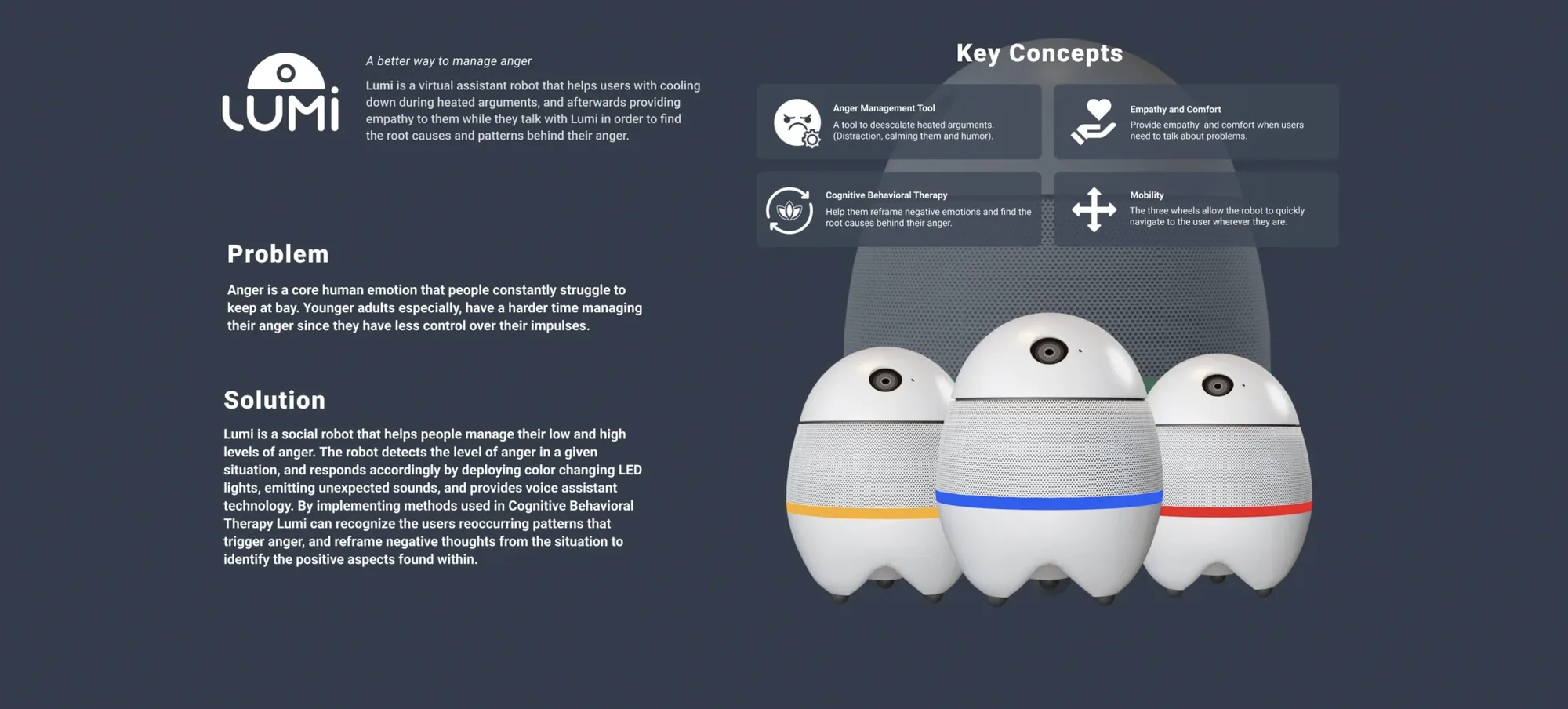
Lumi is a social robot that helps users visually monitor their pattern of anger, cool them down during ongoing arguments, and facilitate greater self awareness in their personal relationships.
Using NLP, facial expression recognition, and SLAM technology, Lumi detects arousal levels and emotion changes during arguments, responding with a precise, two stage intervention designed to stop escalation and open the door to reflection.
My Role
Prototype Lead · Content Writer · Product Designer for slide decks · Lead User Testing Researcher
Technologies
NLP (Natural Language Processing) · Facial Expression Recognition · SLAM (Simultaneous Localization and Mapping) · Amazon Alexa Voice SDK
Anger without a way out
Anger is a core human emotion that people constantly struggle to keep at bay. Younger adults, ages 16 to 24 are especially prone to losing control, with less impulse regulation and fewer emotional tools.
Problems with anger lead to overly aggressive behavior that negatively affects lives and the people around them. Users are unable to express feelings without getting emotional, struggle to recognize their own triggers, and lack specific methods to stop escalating anger before it causes damage.
Help users manage and deescalate anger in real time, improve their interactions with the people they live with, and support reflection on their emotional patterns using an AI powered robot?
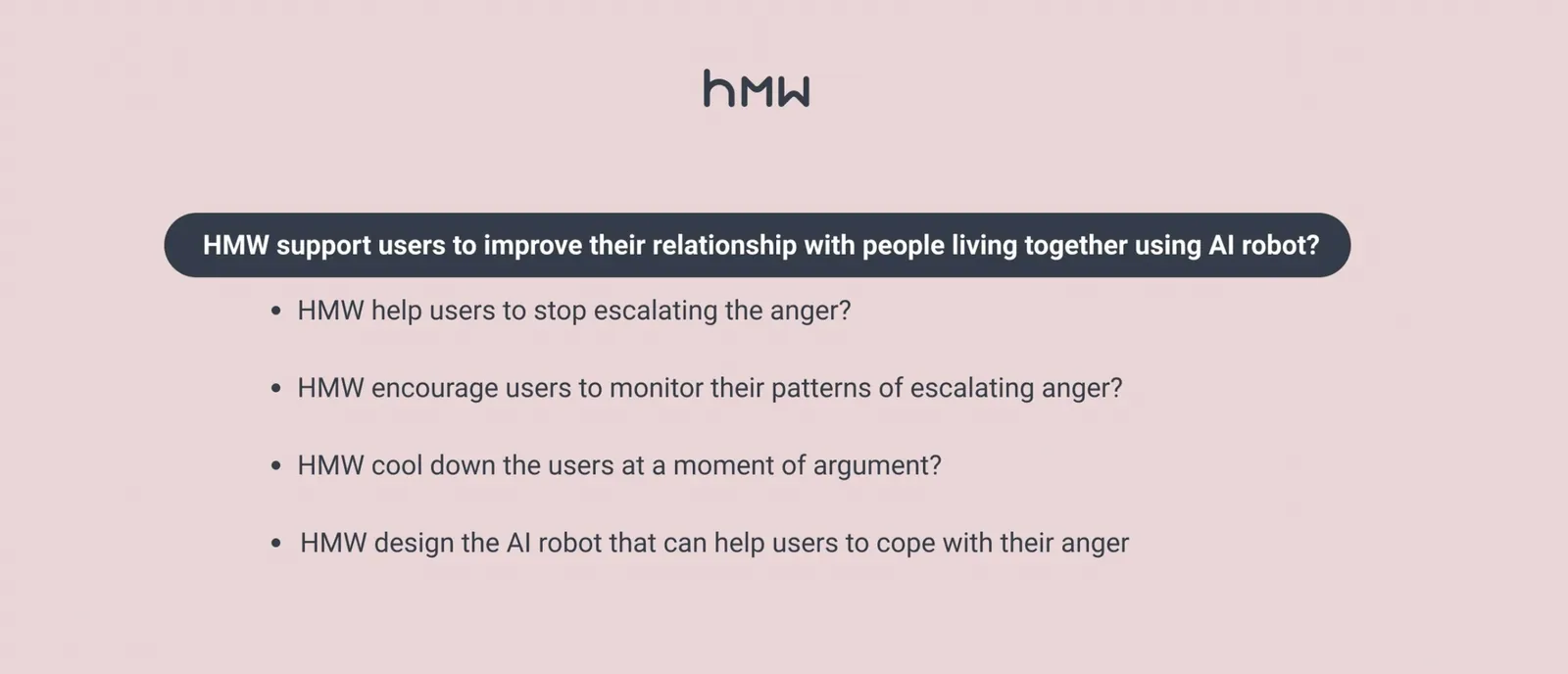
How Might We breakdown, four design sub questions shaping the brief
Target Audience
Ages 16 to 24. Younger adults have a harder time managing anger and impulse control, making them the population that could benefit most from Lumi's presence in their homes.
Proto Personas
Goal: have conversations without them turning into arguments.
Frustration: arguments escalate before she realizes they have started, leaving her feeling guilty and misunderstood. She wants a way to catch the moment before things go too far.
Goal: be more understanding and not get angry so easily.
Frustration: he knows his triggers but cannot stop himself in the moment. Family arguments leave him feeling ashamed after the fact, and he has no way to track whether he is actually improving over time.
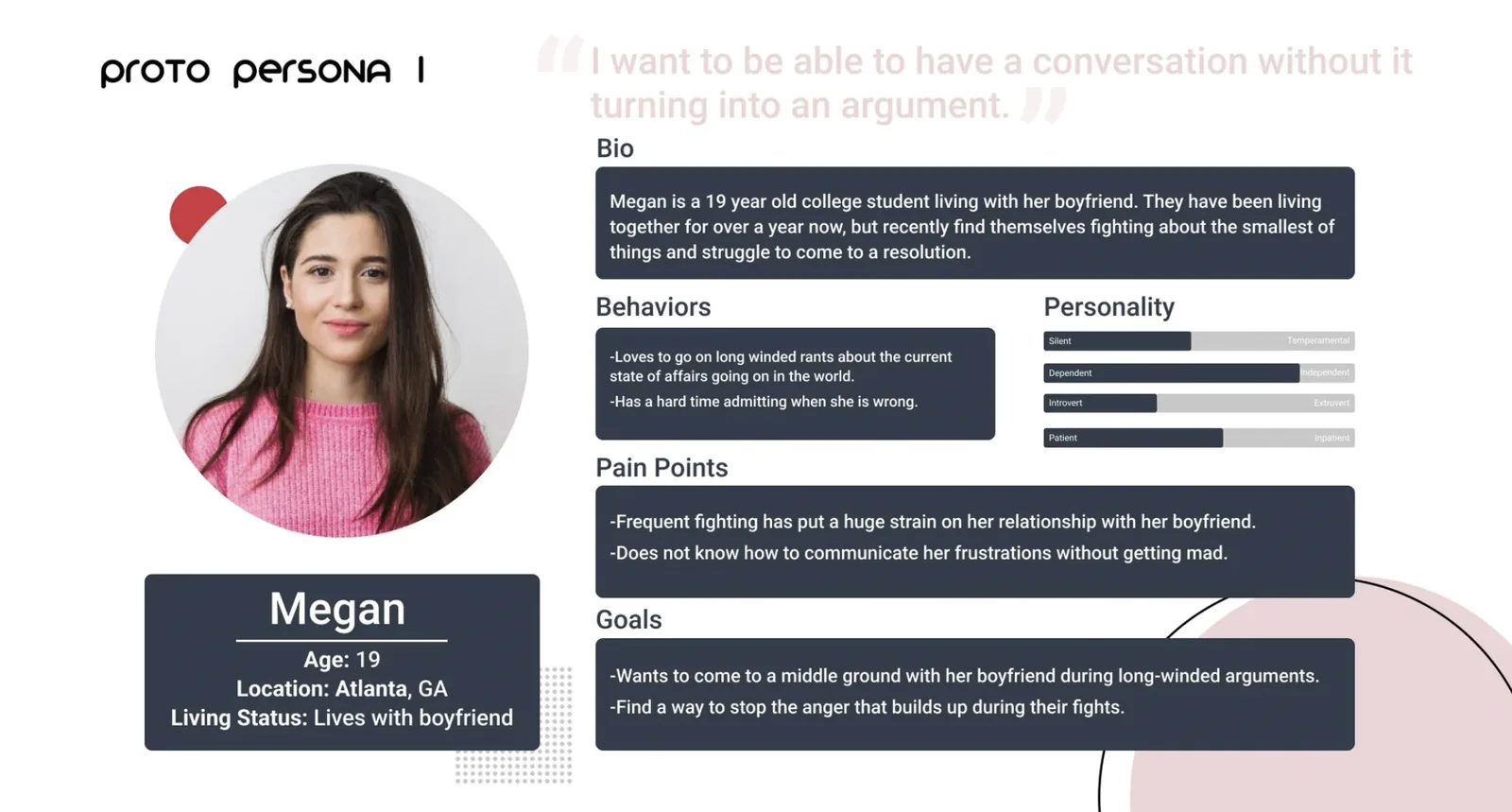
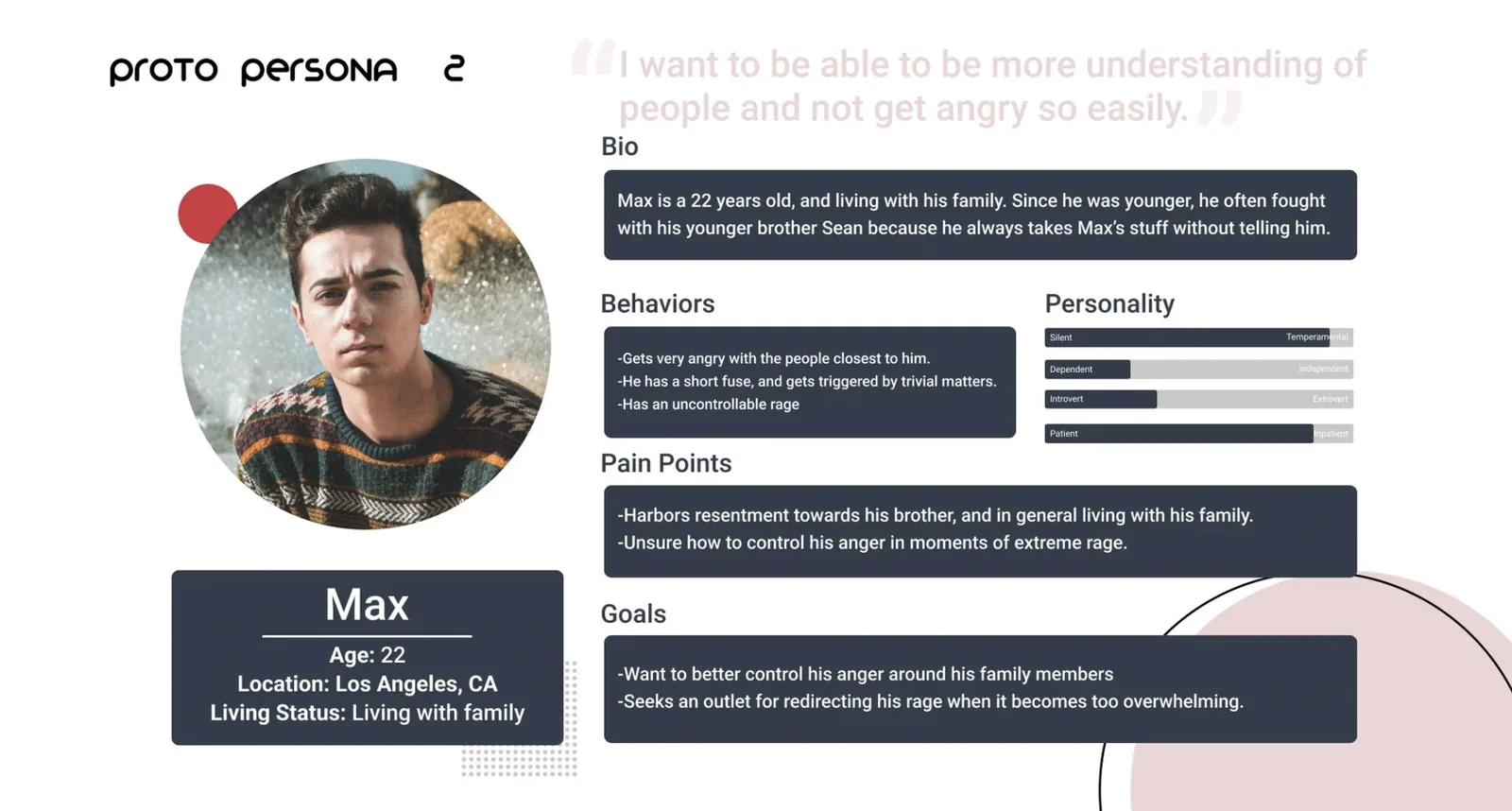
Megan and Max, detailed proto persona profiles grounding the target audience
Defining the direction
Extensive secondary research shaped the target range, product type, and AI integration approach, narrowing a broad emotional problem into a feasible, testable design direction.
The ten week plan anchored the process around two user testing sprints.
Secondary research narrowed the concept toward a home based AI social robot, and known limitations were acknowledged before concept development began.
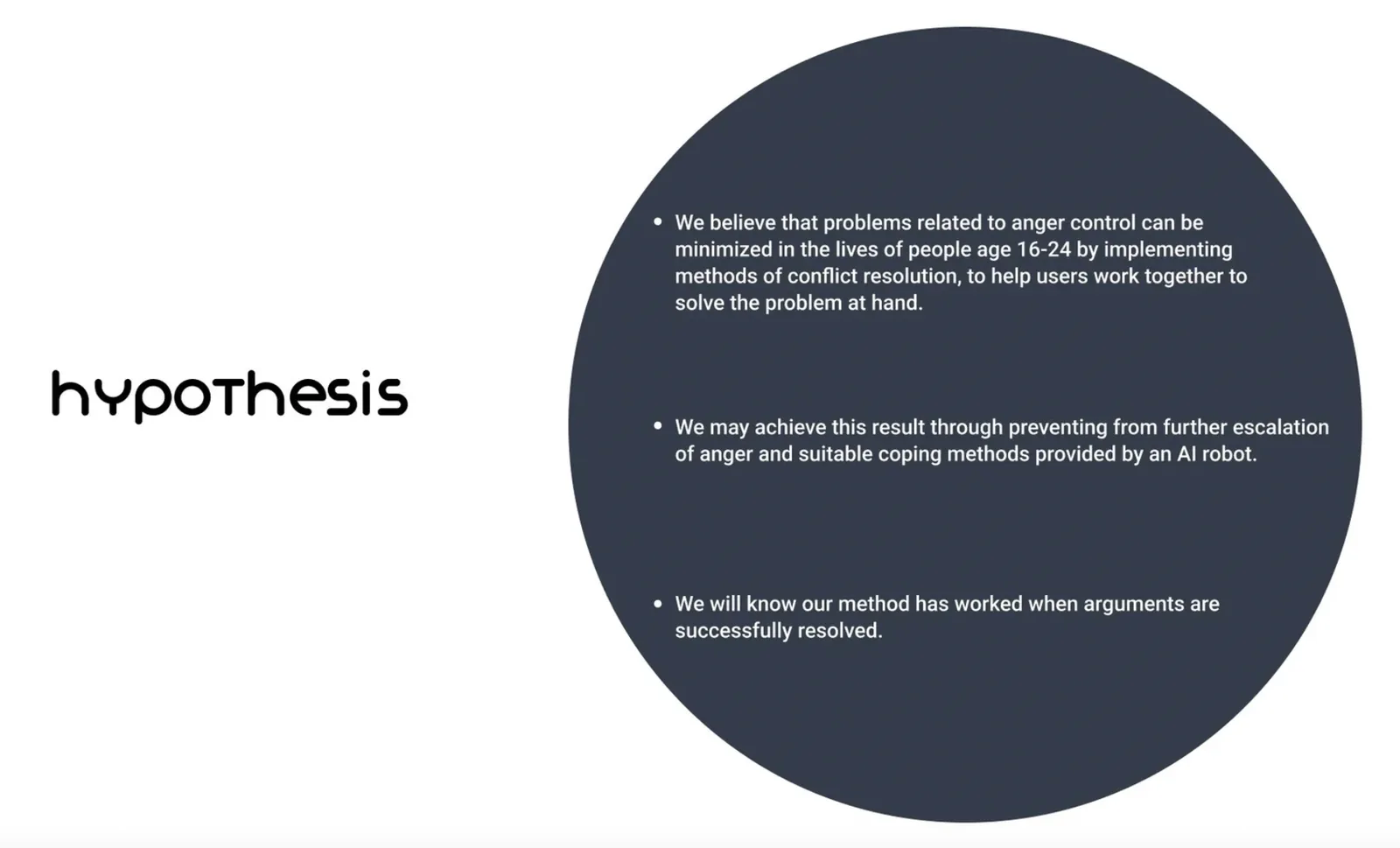
Design hypothesis, the foundation for both user testing sprints
Goals
Three design goals emerged from the research phase and guided every subsequent decision. They ran in sequence.
- Stop the escalation of the anger
- Build an empathetic relationship with the robot
- Understand the patterns of anger within themselves and others
Designing the system
Lumi's concept is a two stage system: first interrupt the escalation, then facilitate emotional reflection through Cognitive Reframing.
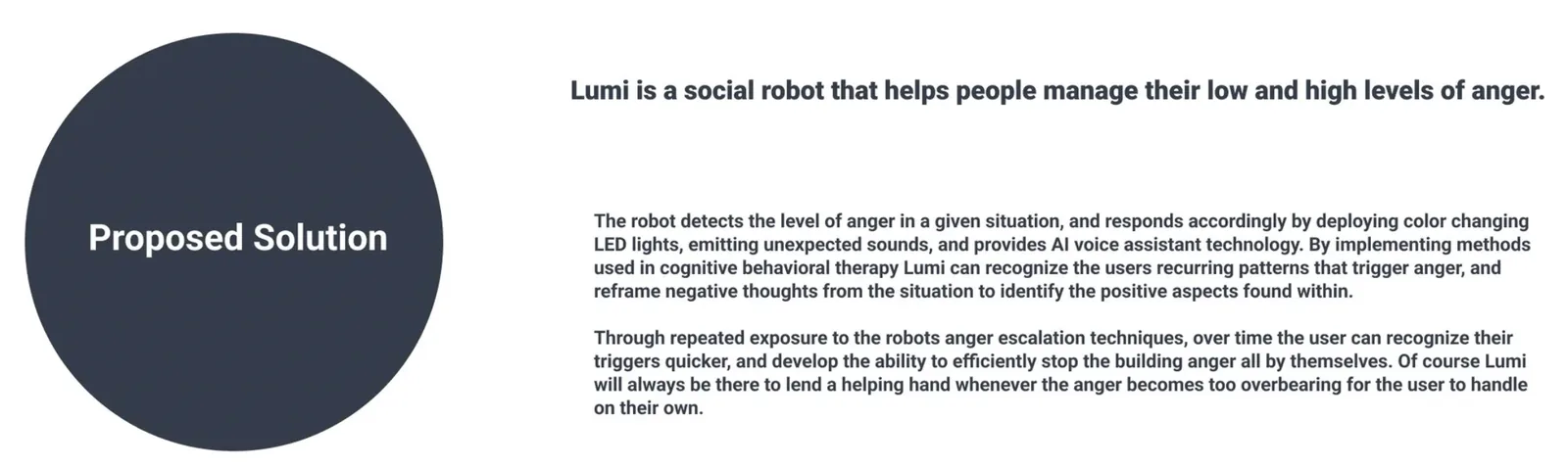
Proposed solution, a two stage physical robot using sound, light, and voice
Lumi positions itself as a neutral mediator between both parties.
How Lumi works
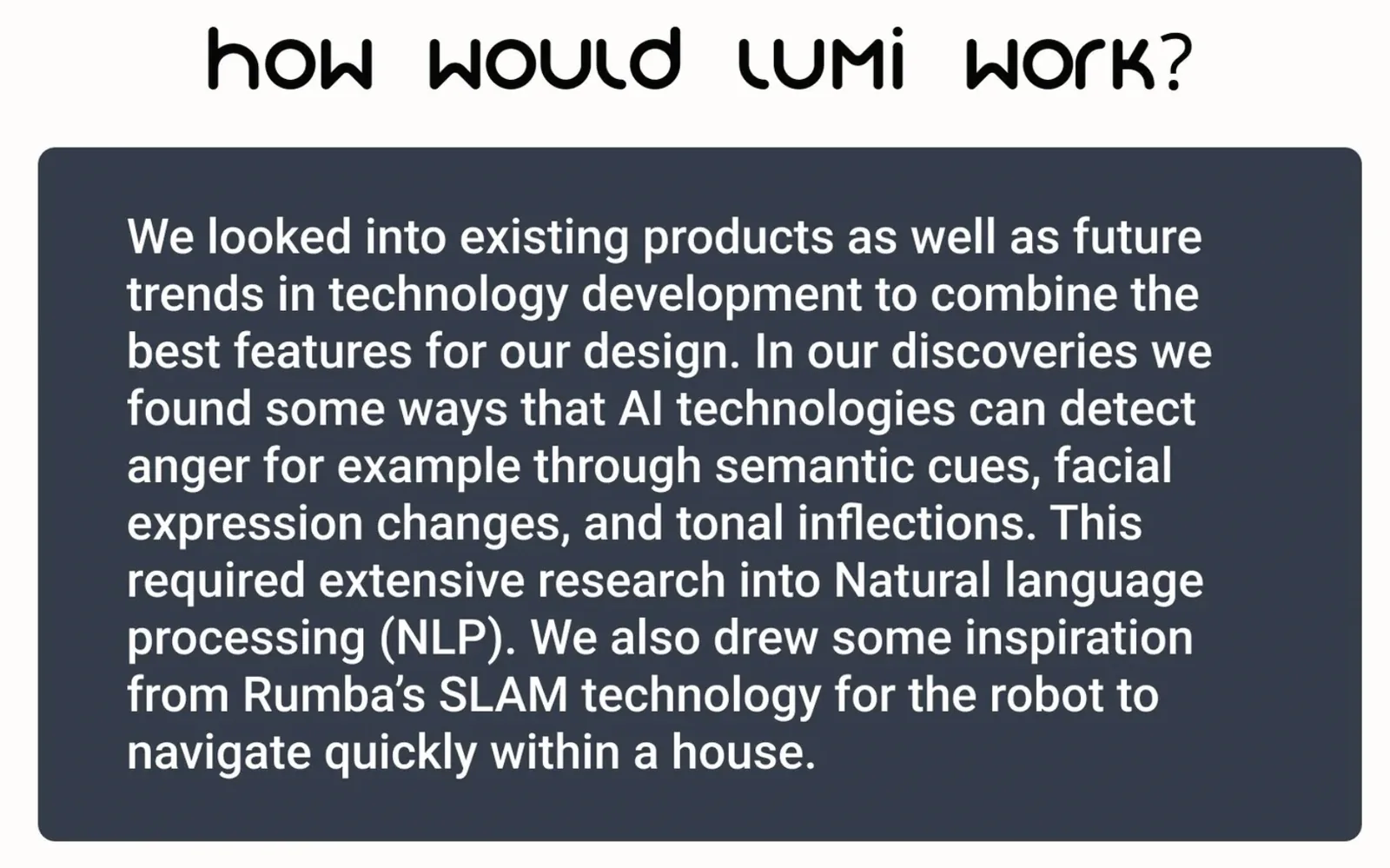
Research into existing products and future trends in AI led the team toward three core technologies: NLP for semantic and tonal cues, facial expression recognition for visual emotion signals, and SLAM technology (inspired by Roomba) to navigate the home and approach users quickly.
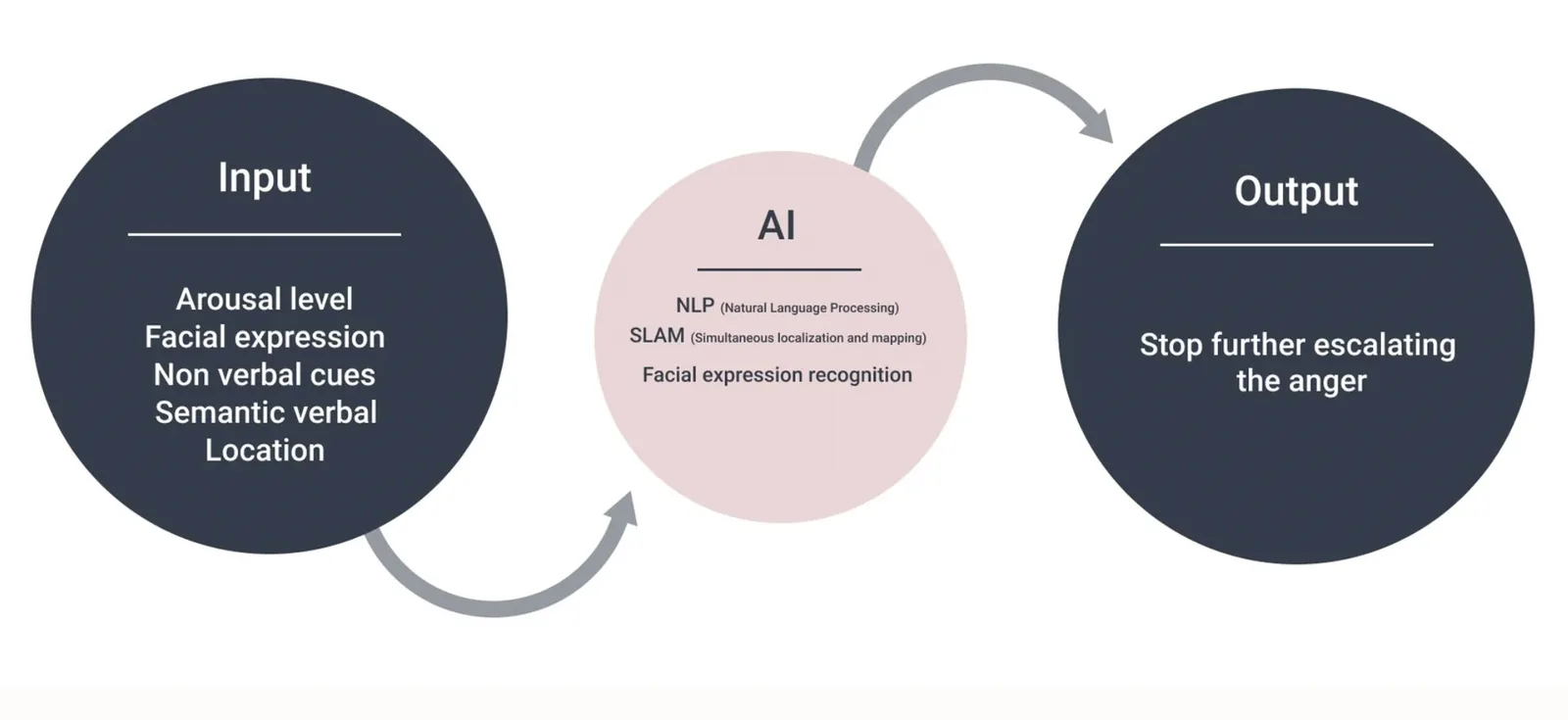
Sensor inputs flow through the AI layer to produce targeted responses
Low Fi Prototype
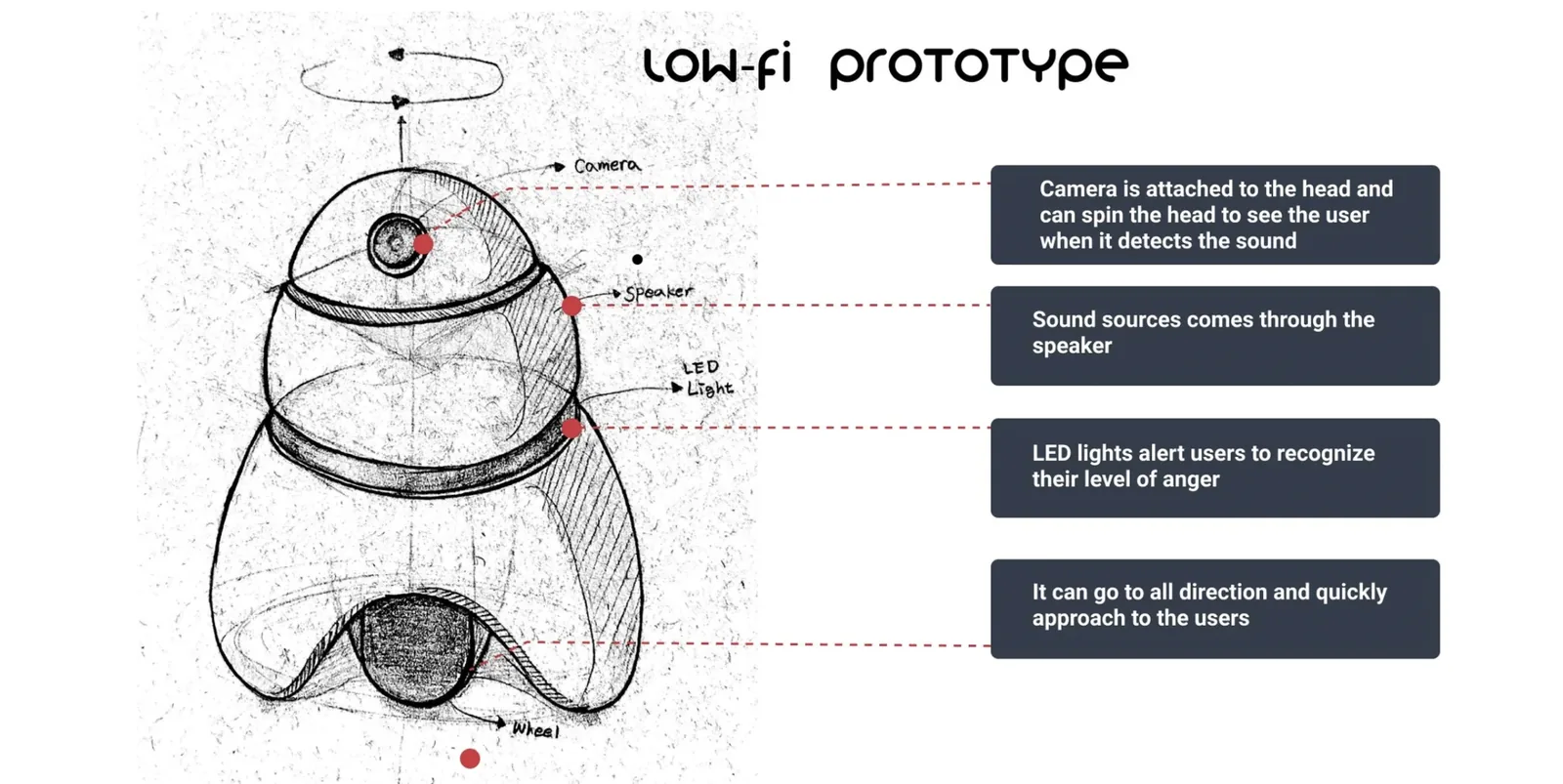
Low fidelity prototype, core hardware components annotated on an early sketch
Use Cases
Two use cases were designed to address the full range of anger intensities. At low anger, subtlety is paramount, an unobtrusive cue that doesn't break the conversation. At high anger, the intervention must be immediate and impossible to ignore.
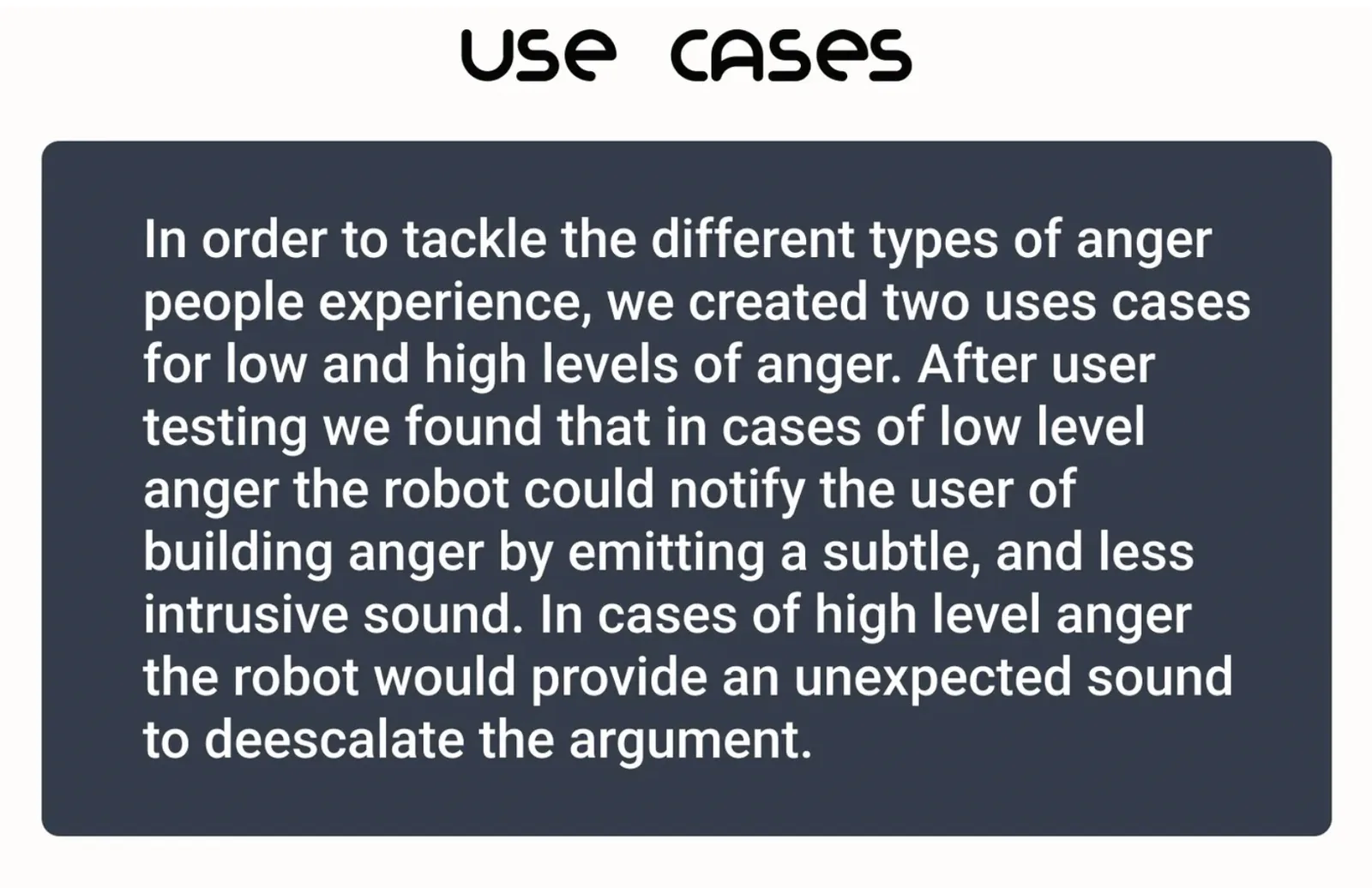
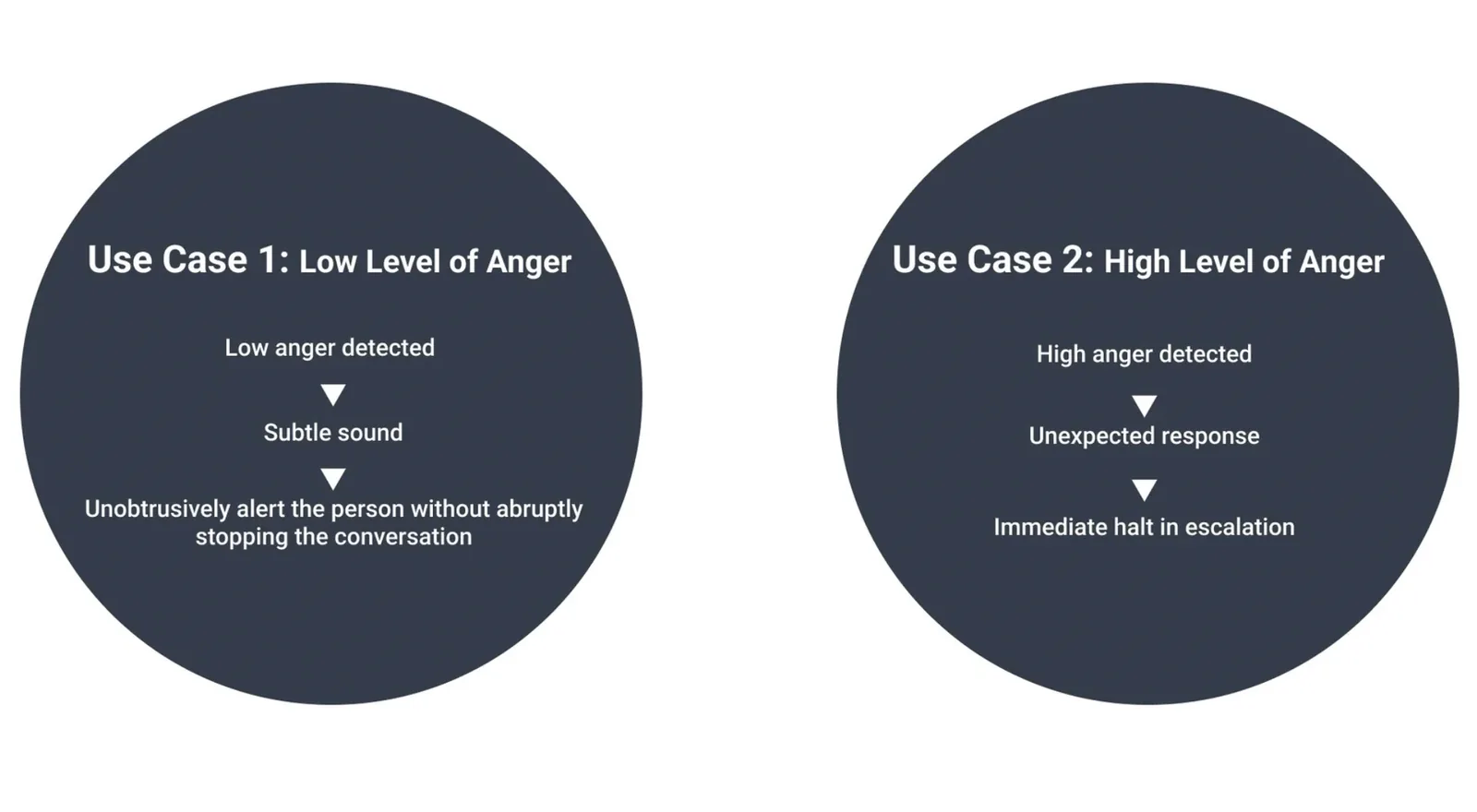
Use Case 1 (low anger) and Use Case 2 (high anger), matched responses by intensity
Core Features
Six capabilities make the two stage system work.
- Speaker · provides a source of sound to cool users down in heated moments
- Microphone · detects the noise during an argument and locates the users in their environment
- Camera · the head spins 360 degrees and the camera detects facial expressions
- SLAM · maps the environment of the house
- LED light · warns the users with different colors of light depending on their level of anger
- Mobility · quickly approaches the users and provides a cool down method during a heated argument
Physical Design
Lumi's form is futuristic yet friendly, inspired by BB8 and designed to be simple and non threatening. Brand values: Friendly, Warm, Empathy. The LED light band is the primary emotional display, changing color in real time to signal the current anger level.
Lumi's Persona
To ensure consistent character across all interactions, the team built a brand persona for Lumi: approachable, empathetic, and friendly, with a calm and warm tone of voice.
Two Stage Concept Direction
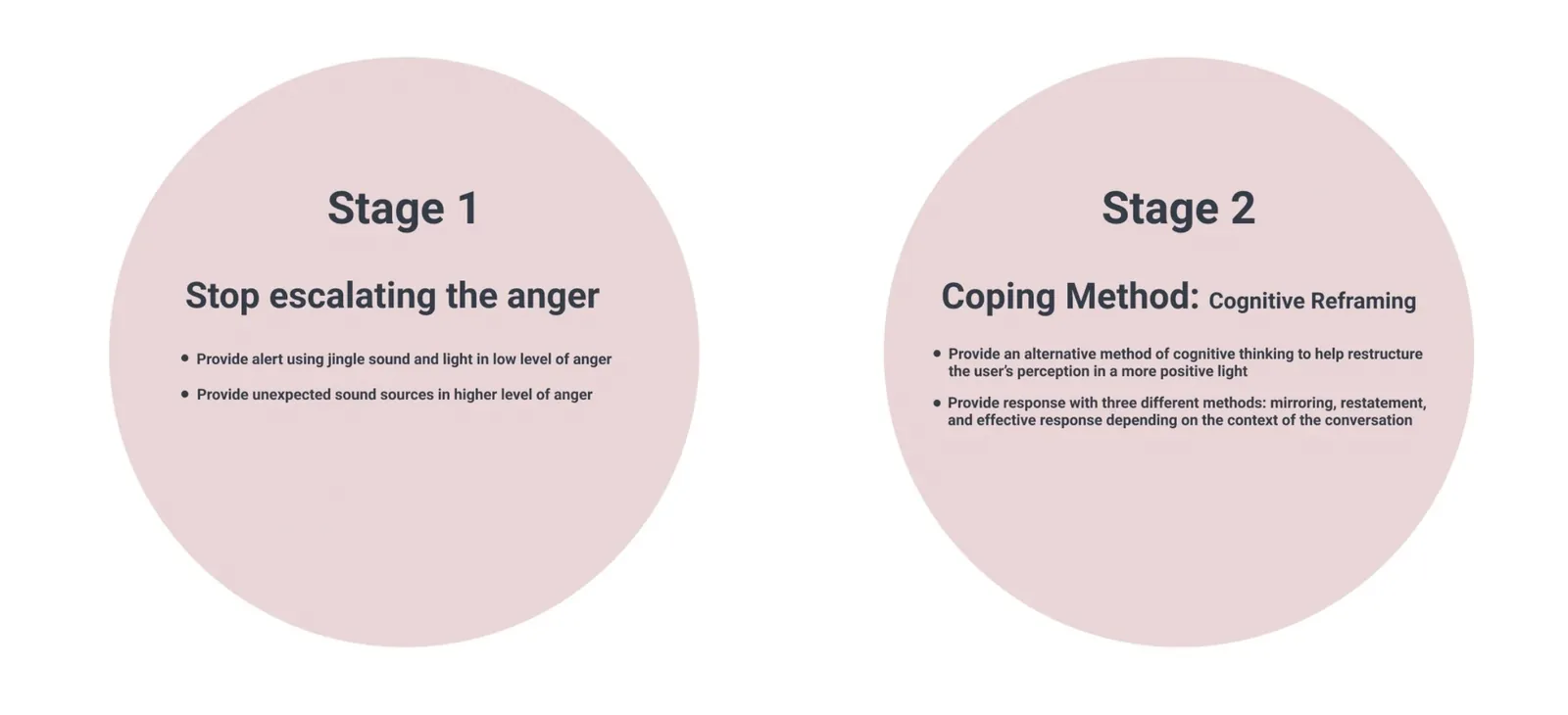
Stage 1 interrupts; Stage 2 reframes
Scripting empathy
After mapping common argument scenarios, three voice scripts were created to cover the emotional states a user might be in when approaching Lumi, and to train Amazon Alexa's intent recognition on realistic conversation data.
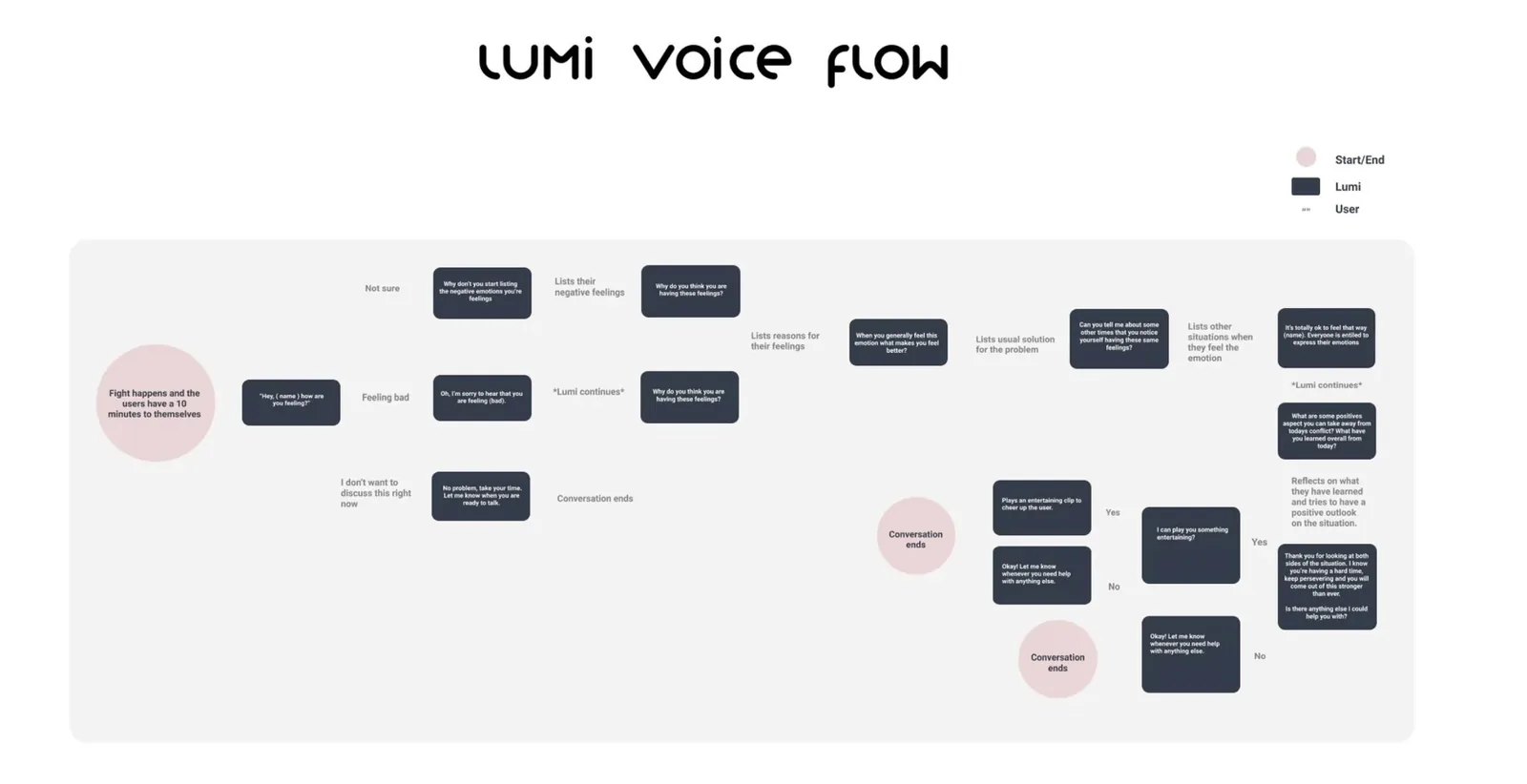
Full voice flow, branching paths cover all three emotional entry states
Lumi in action
Two storyboards place Lumi in realistic domestic scenarios, grounding the concept in the daily lives of the proto personas and communicating the two stage response model.
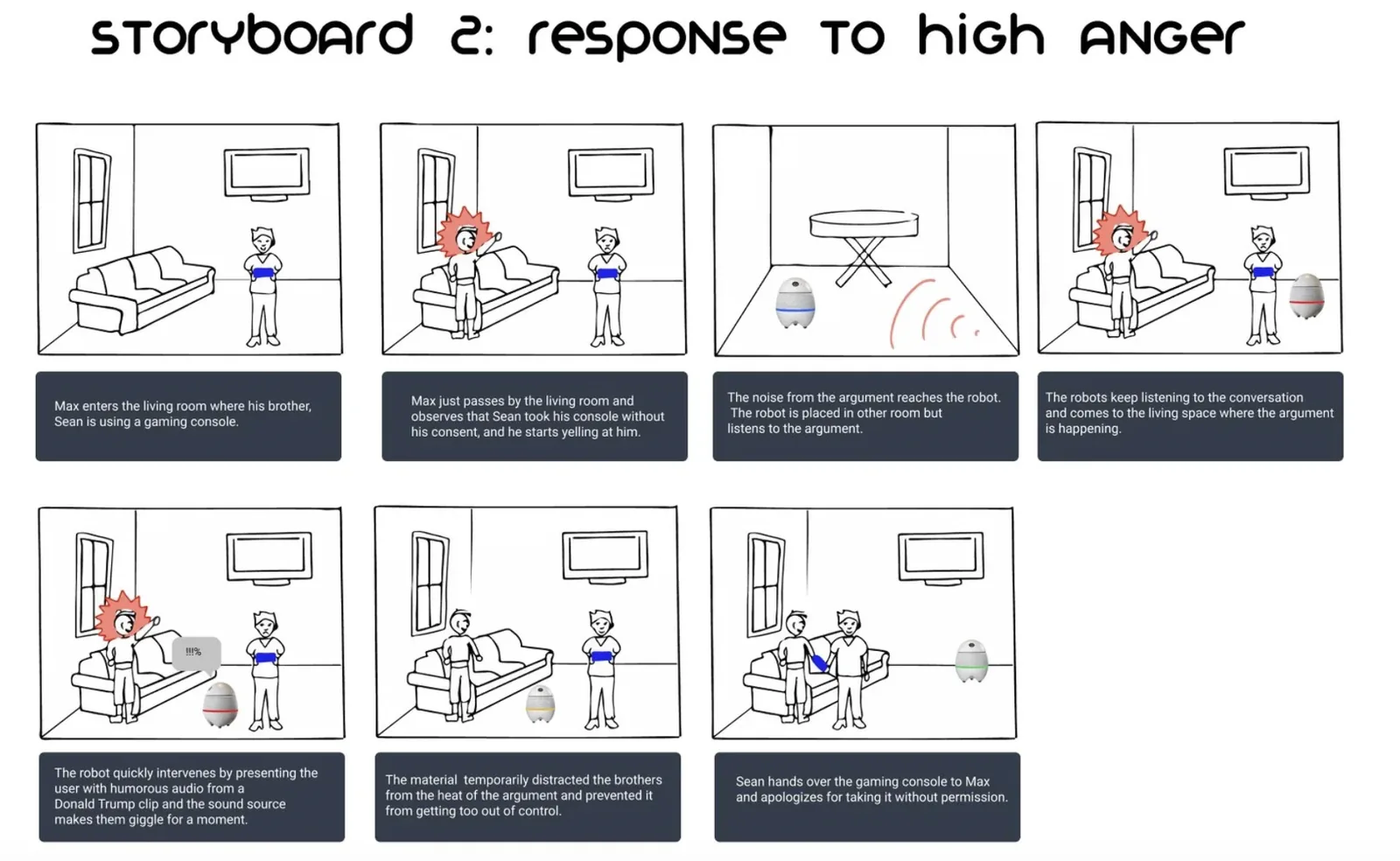
Storyboard 2, Lumi's high anger intervention: unexpected humor breaks the tension immediately
Two sprints, real insight
Two rounds of user testing across 15 participants validated sound effectiveness and refined the voice design. Each sprint combined quantitative surveys with contextual inquiry sessions.
Evaluation Questions
Sprint 1 set out to answer five concept questions and two design questions.
- Does the interruption from the AI robot with an unexpected sound actually cool them down during an argument?
- What kind of sound most effectively gets the user's attention?
- How do users perceive the unexpected sound effect during the argument?
- How do users feel about getting different responses for different stages of anger?
- Do they want consistency with content or do they want varied audio from the robot?
- Do users feel that the size and design of the robot would be effective in calming them?
- Is the movement and speed of the robot enough to catch the user's attention during a heated argument?
MVP Testing Plan
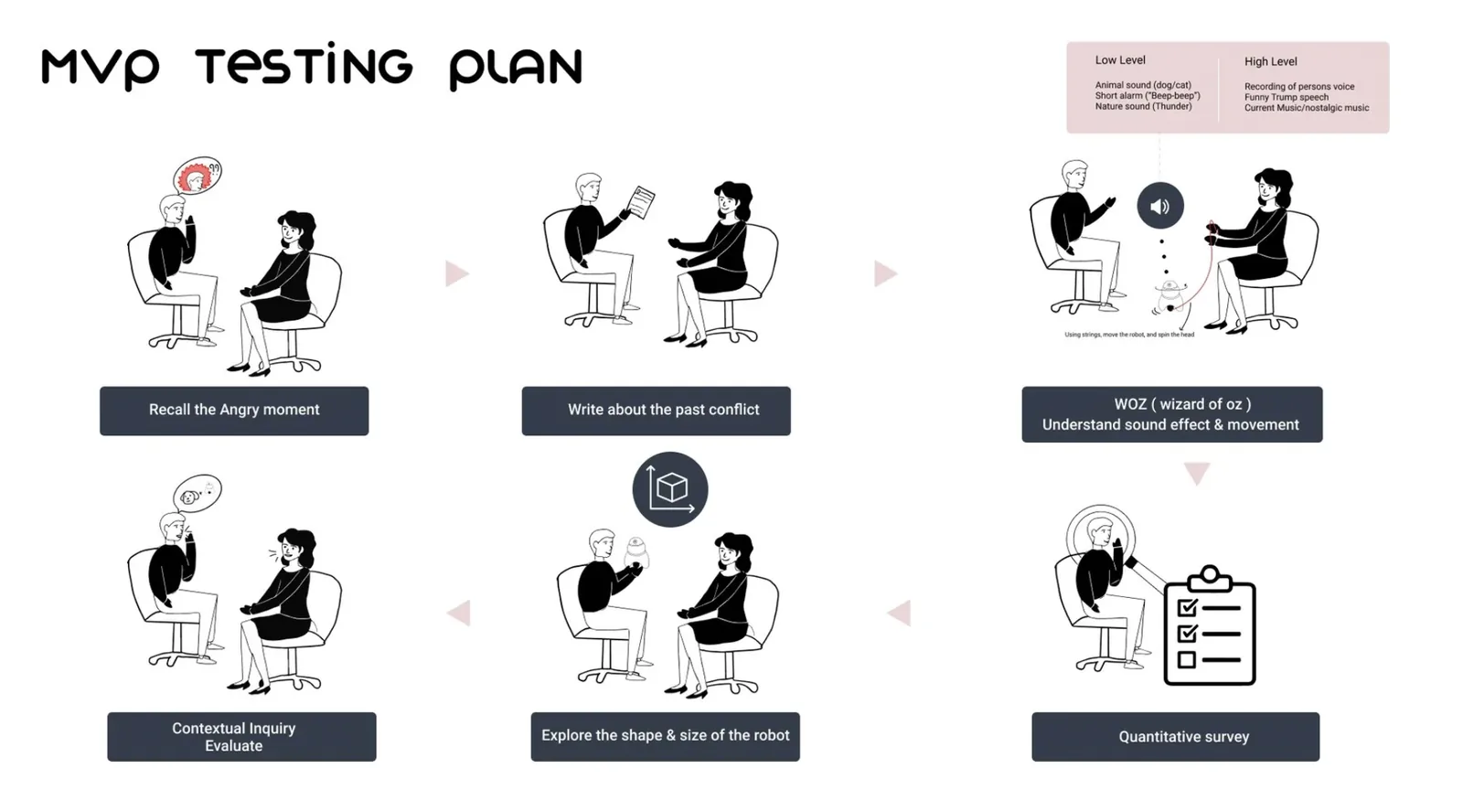
MVP testing plan, six step Wizard of Oz simulation run across 8 participants
Sprint 1, Sound Effectiveness
8 participants · Quantitative survey (20 min) + Contextual inquiry (30 min)
Results: animal sounds were most effective for low anger situations; playing back the user's own voice was most effective at high anger, both surprising and disarming.
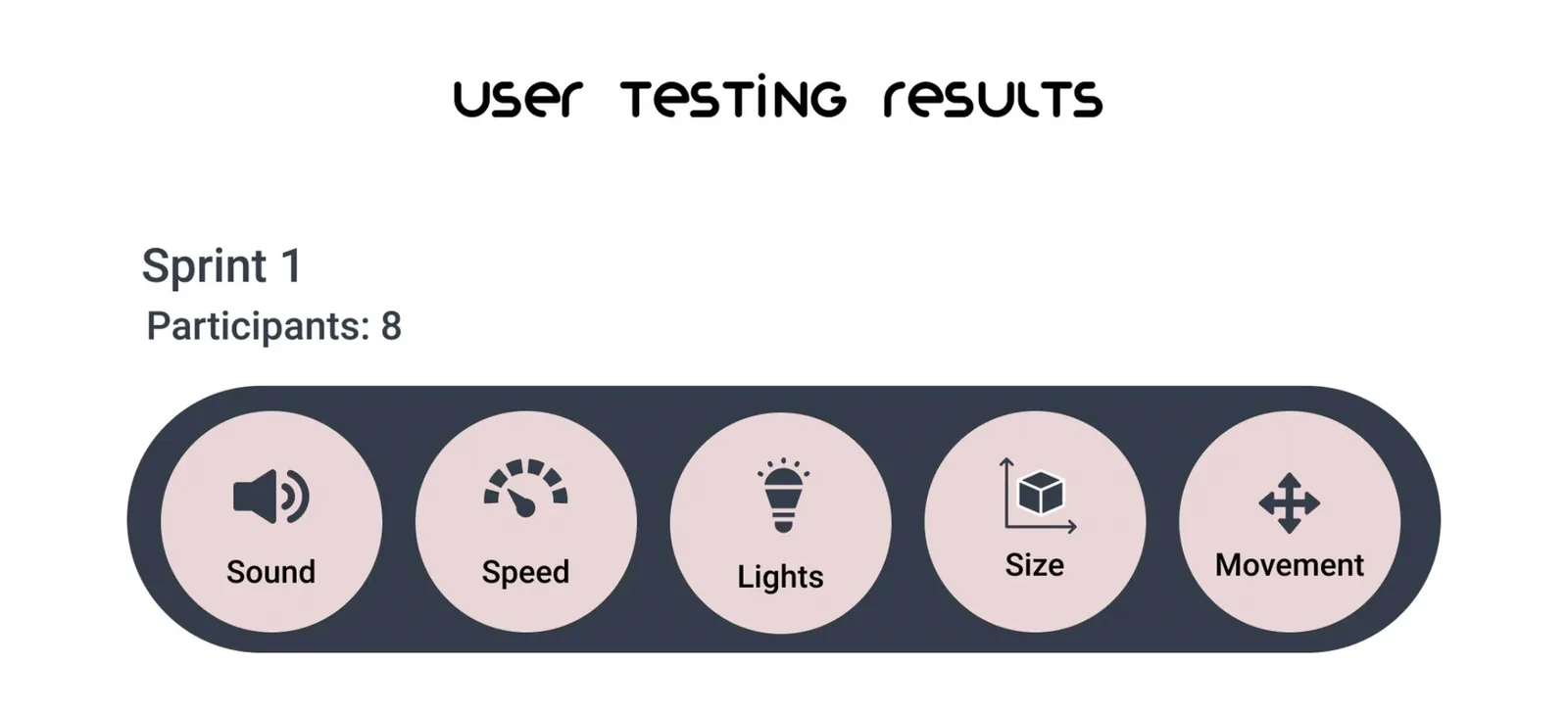
Sprint 1, five dimensions evaluated across 8 participants
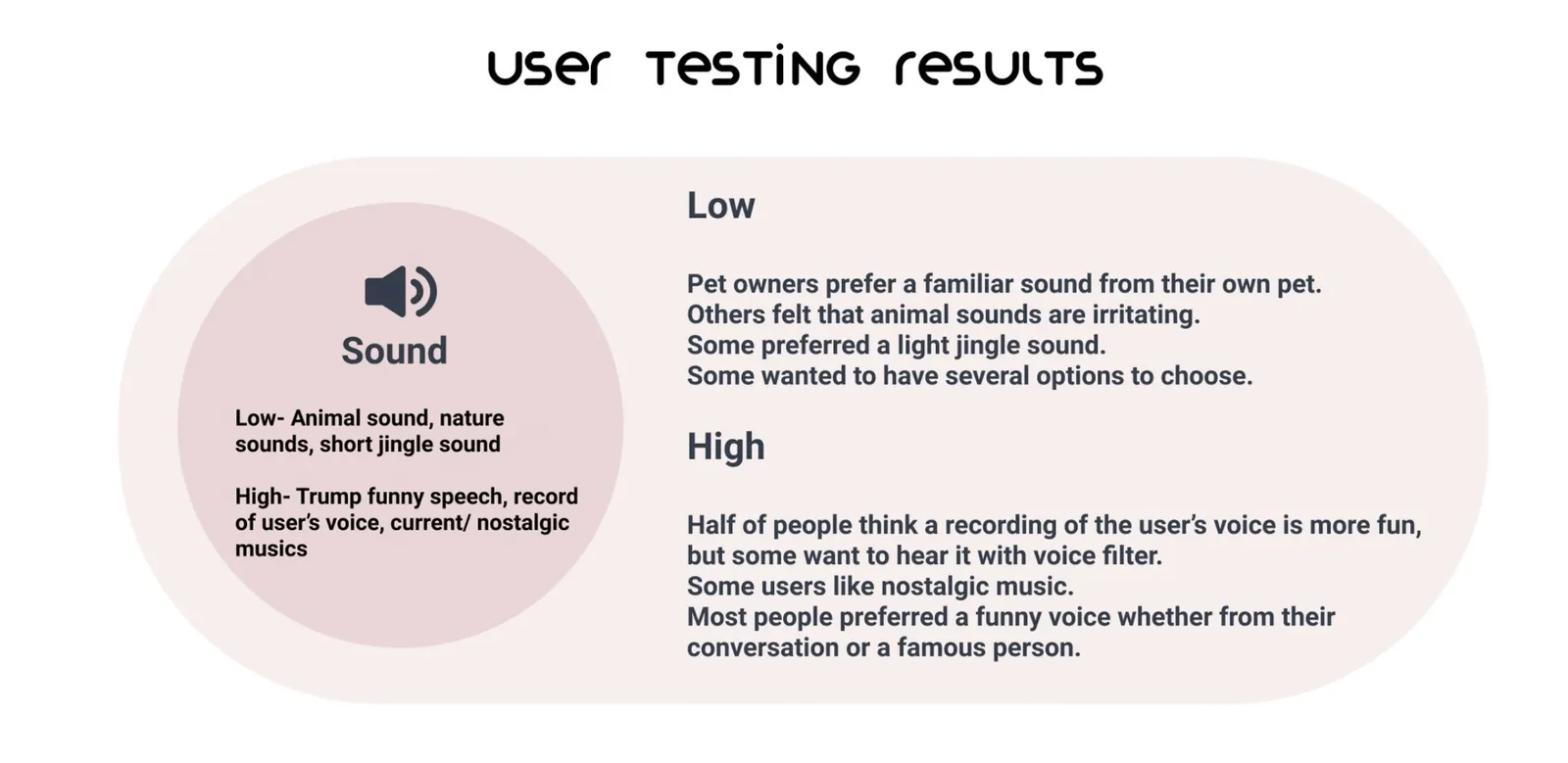
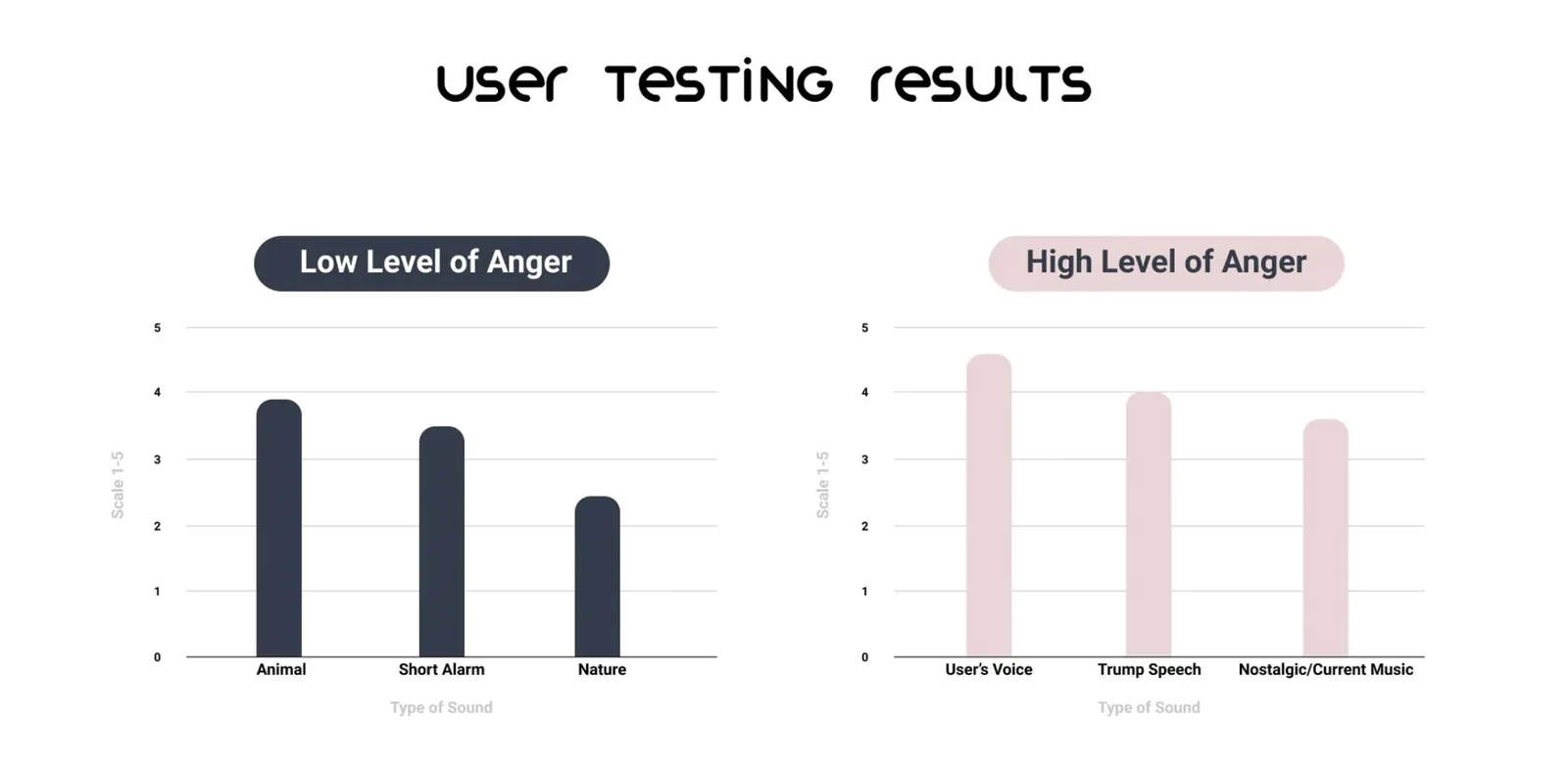
Sound results, animal sounds top for low anger; user's own voice most effective at high anger
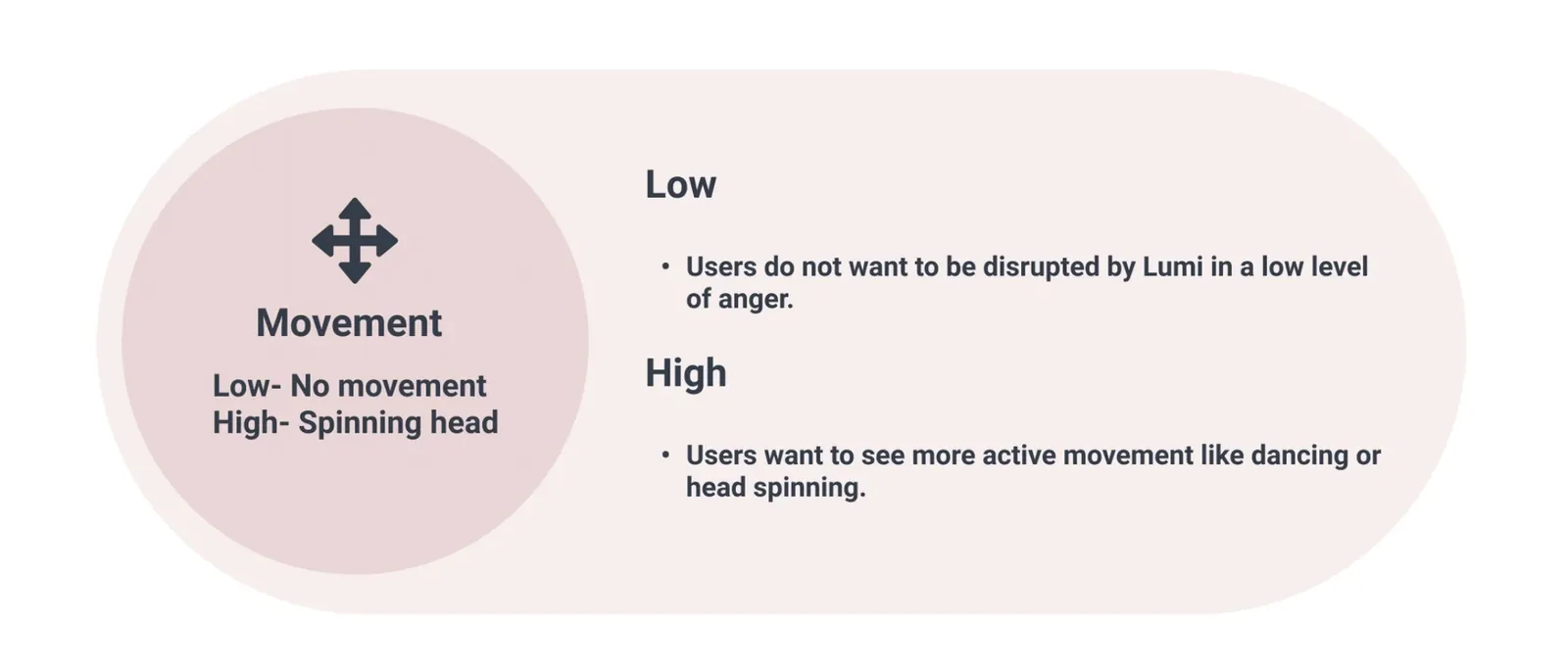
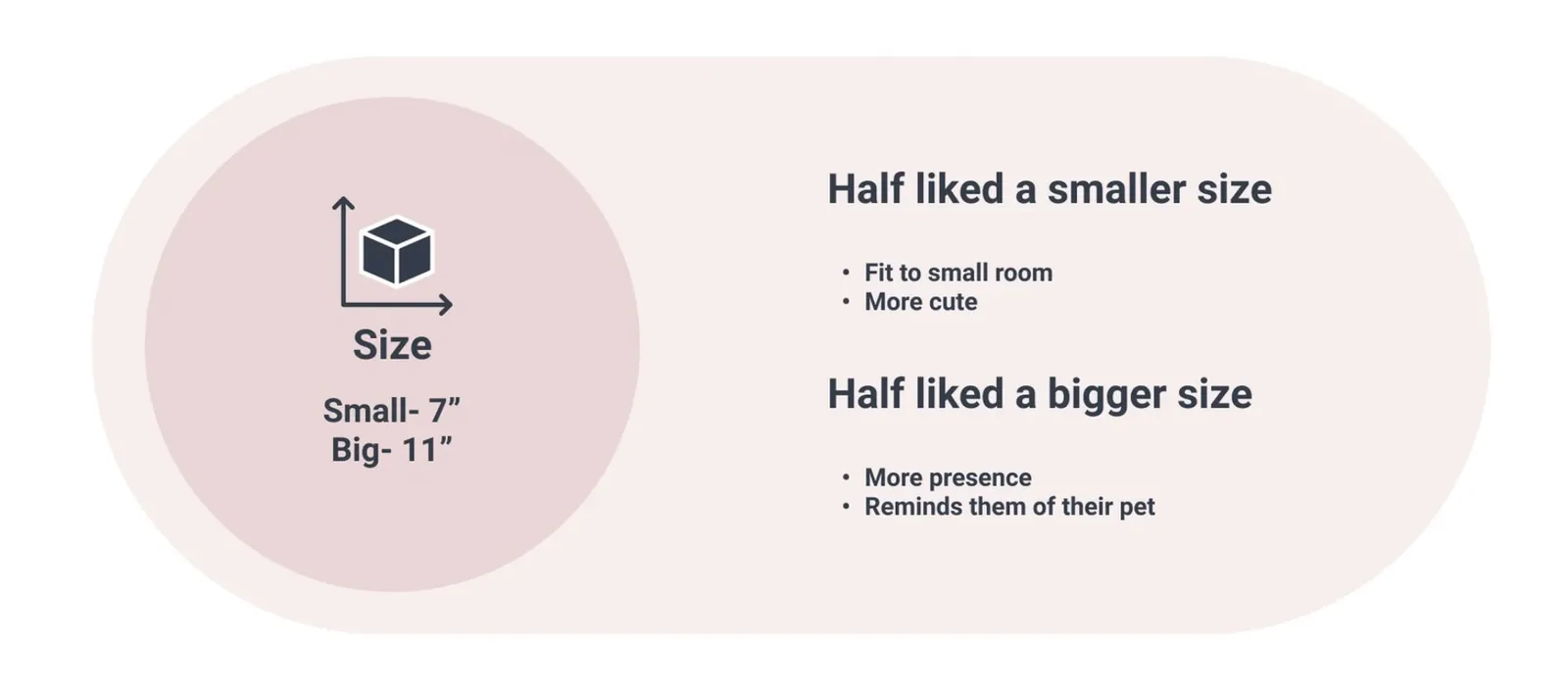
Movement and size, active motion preferred at high anger; size split evenly between 7″ and 11″
Sprint 2, Voice Design Naturalness
7 participants · Contextual inquiry (30 min)
Lumi's voice scripts were tested via a foam physical prototype and the Amazon Alexa developer environment, simulating realistic interaction scenarios.
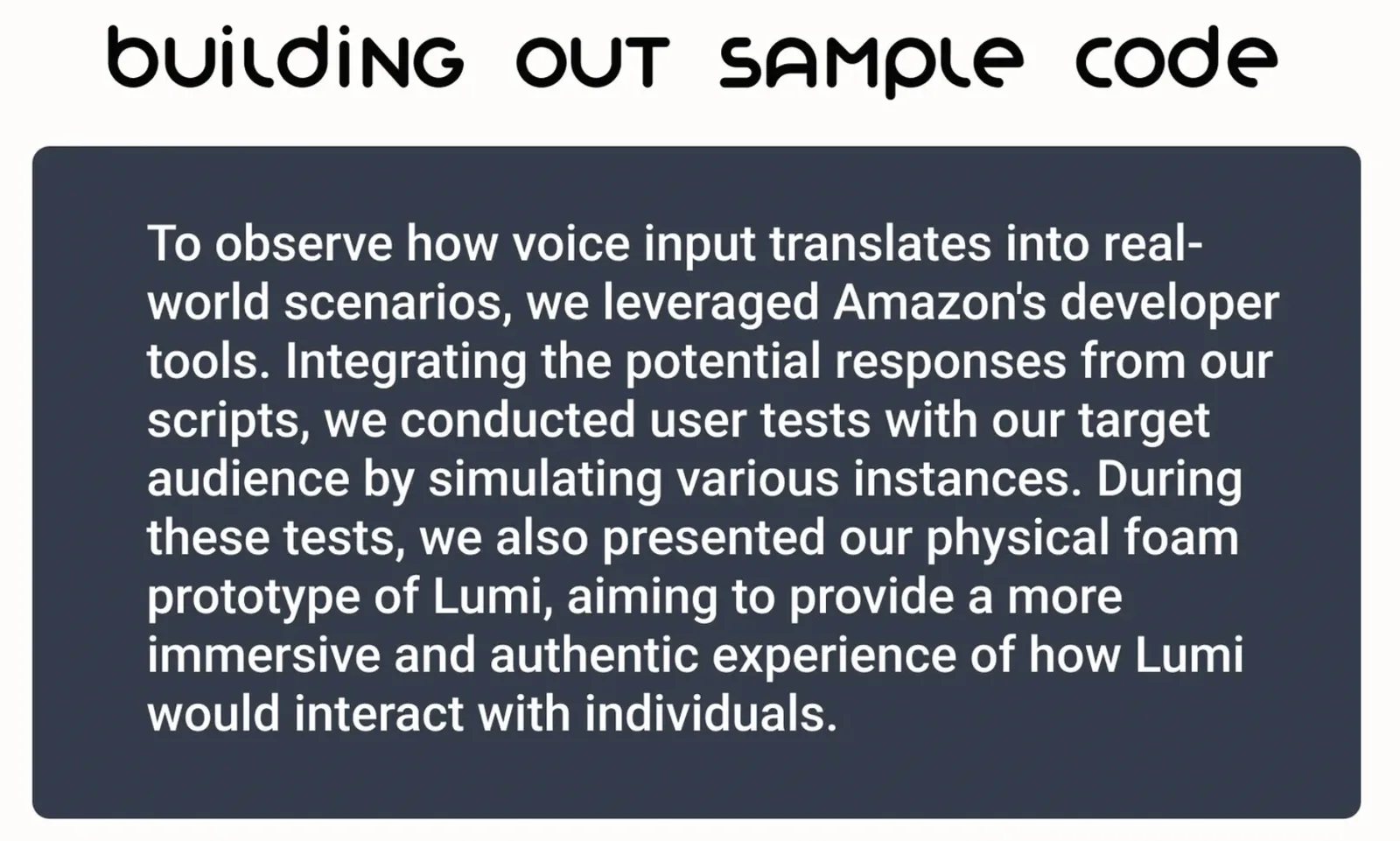
Voice interactions built in Amazon's developer environment, tested with a foam prototype
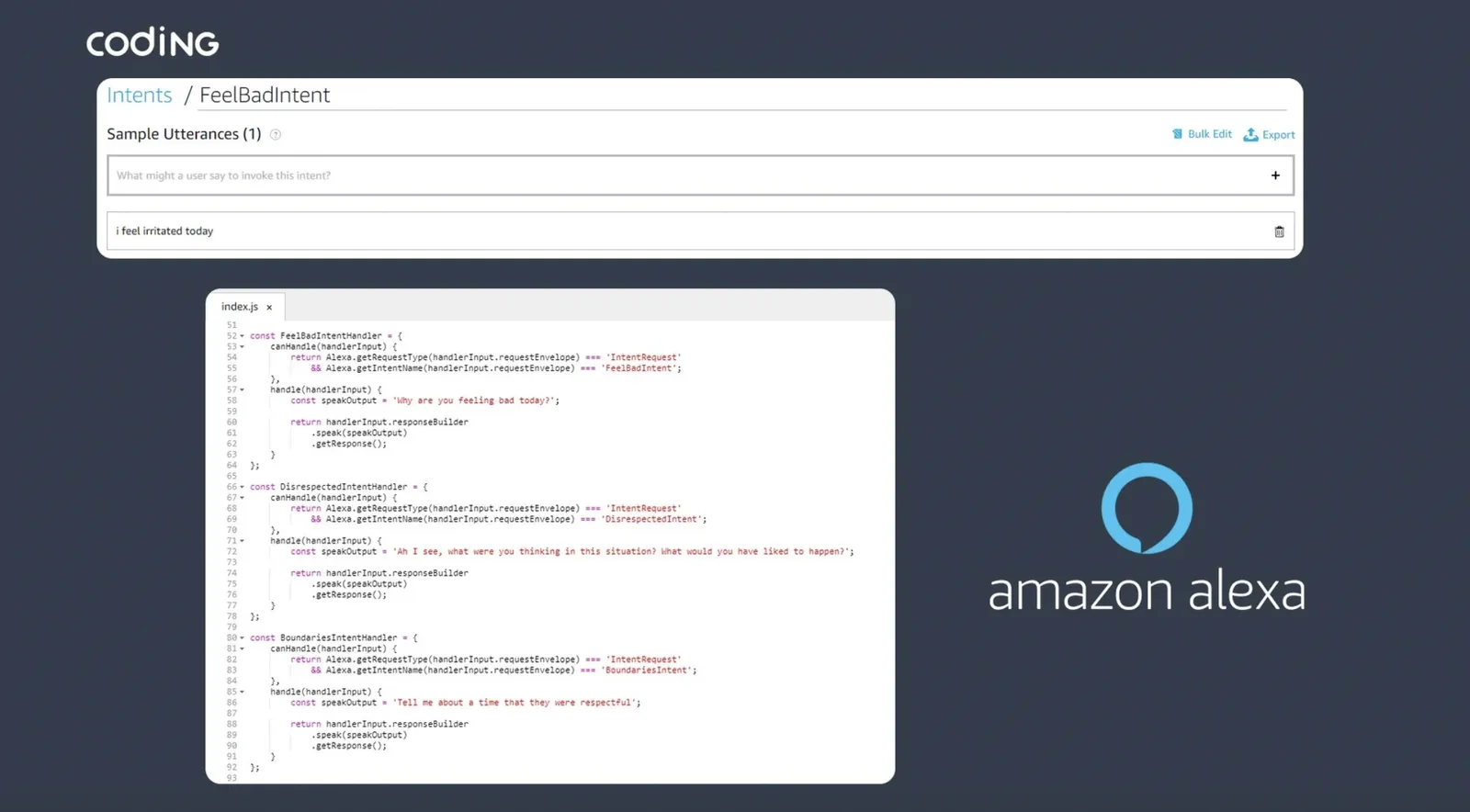
Amazon Alexa Developer Console, voice intents coded and tested in real time
Key Insights
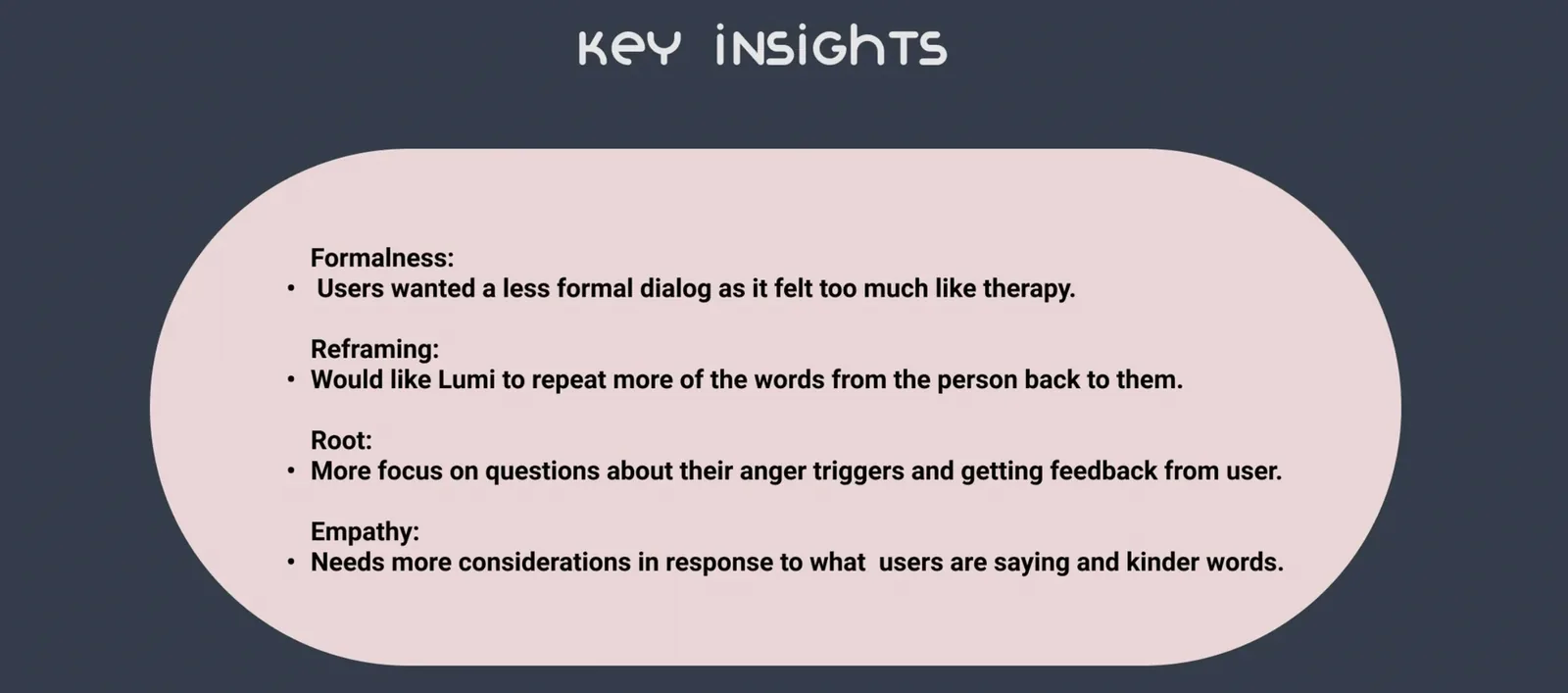
Four dimensions of voice design feedback from Sprint 2
Users wanted a less formal dialog, it felt too clinical, like therapy. Lumi needed a warmer, more casual tone.
Users wanted Lumi to mirror more of their words back to them, creating a more personal and connected feel.
More focus on identifying the underlying triggers of anger, rather than addressing only the surface level response.
Responses needed more consideration for what users were actually expressing, kinder, gentler language throughout.
Design Changes
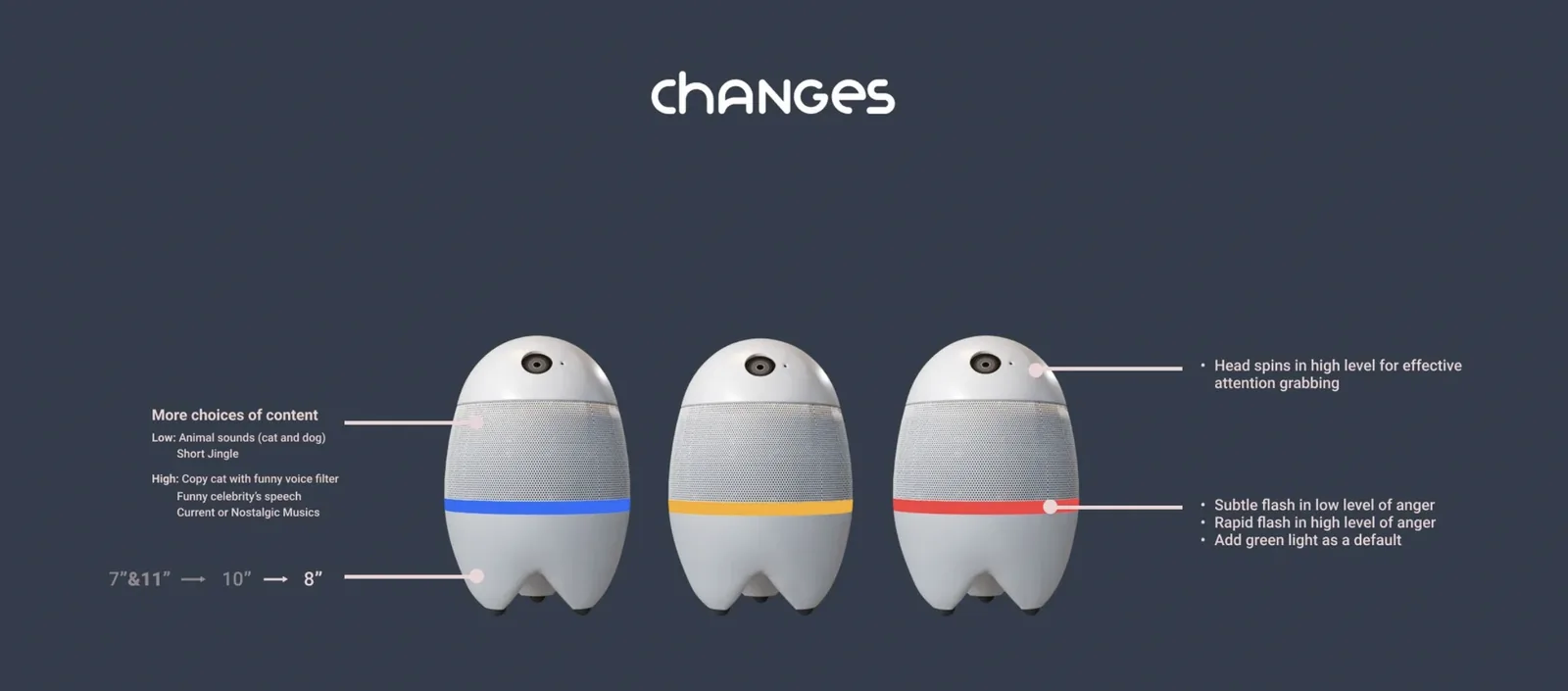
Post testing changes: expanded sound library, refined LED flash behavior, and a final size of 8 inches, settled after testing the 7 and 11 inch options
Validating a new category of emotional intervention
This semester long project was completed in a graduate UX studio at SCAD. It demonstrated that a physical AI robot using sound, light, and voice could effectively interrupt and deescalate arguments, with strong, positive user response across both testing sprints.
Unexpected audio stimuli outperformed every other interrupt method tested, and users who engaged with the Cognitive Reframing scripts reported feeling genuinely heard rather than managed. The long term pattern recognition model was the feature users most wanted to see built, validating the core premise that emotional support tools need to improve the more they know you.
Key Takeaways
Two sprints of testing across 15 users confirmed that unexpected audio stimuli and Cognitive Behavioral Therapy methods are not just accepted by younger adults but actively preferred over conventional calm down prompts. The pattern recognition model proved compelling to users who had never considered that a device could learn their specific triggers over time. The biggest design lesson was that emotional tools need to feel like a relationship, not a feature. Users responded to Lumi not as a product interrupting an argument but as a presence that understood them.
Future Directions
A personalized onboarding experience to build a custom relationship between Lumi and each individual user from day one.
A mobile app that lets users review anger patterns over time, track emotional growth, and manage Lumi's settings.